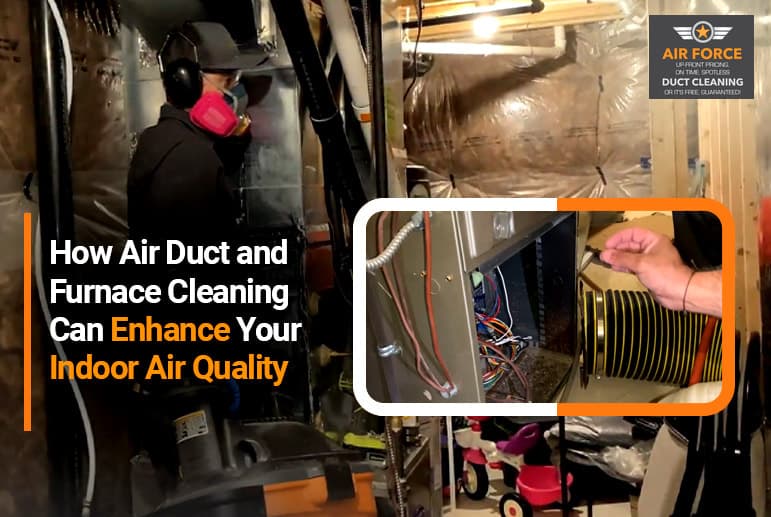
By Adel Majd, Chief ExtraOrdinary Officer, Air Force Shield (how we write). Published , updated in HVAC Maintenance & Efficiency
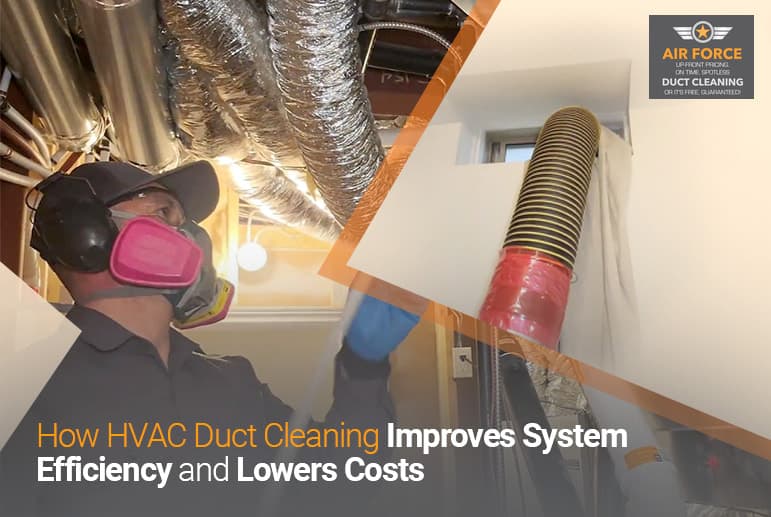
Dirty ducts affect your HVAC system in one basic way: they make it harder to move air. Less air reaches the far rooms, the blower works against more resistance, dust that gets past the filter settles on the coil and in the furnace, and the filter loads faster. None of that breaks the system overnight, but it is the background strain that wears parts out early. Cleaning the ducts, blower and furnace base removes that strain. It does not, on its own, come with a guaranteed energy saving, and this post will not pretend otherwise.
How air is supposed to move through a house
A forced-air system is a loop. The blower in the furnace pushes conditioned air out through the supply trunk and its branches to every register, and pulls room air back through the return grilles, the return trunk and the filter. The furnace or air conditioner's indoor coil sits in that path. The installer sized the blower and the ductwork for a certain volume of air at a certain resistance. Anything that adds resistance, from a clogged filter to a return trunk lined with ten years of dust, pushes the system off that design point.
Resistance is not spread evenly. The rooms at the end of the longest runs, which in most GTA two-storey homes means the upstairs bedrooms, lose airflow first. That is why the top floor of a Milton townhouse is the hot room in summer and the cold room in winter, and why cleaning often helps those rooms more than the ones beside the furnace.
Airflow and the blower
When ductwork restricts airflow, the blower does not simply move less air and rest. It runs longer, because the thermostat is not satisfied as quickly, and in many systems it works harder against the restriction. Longer run times mean more hours on the motor bearings and more cycles on the furnace. In a system that is already marginal, restricted airflow across the heat exchanger can let the furnace overheat and trip its limit switch, so it shuts off before the house is warm and starts again a few minutes later. Homeowners describe this as the furnace "short-cycling" and often blame the thermostat.
The blower wheel itself collects dust. Each blade carries a layer of grey fuzz that changes the wheel's shape and balance, and a dirty wheel moves less air for the same effort. Cleaning the blower and the furnace base is step 9 of the 12-step process for exactly this reason. Cleaning the ducts and leaving the blower dirty solves half the problem.
Coil fouling
The indoor coil of an air conditioner or heat pump is a bank of thin aluminum fins a few millimetres apart. Dust that gets past the filter, or that was already in the supply side of the system, sticks to those fins, especially when they are wet with condensation in summer. A coated coil transfers heat less well and passes less air. Natural Resources Canada's home maintenance guidance lists a dirty inside coil as one of the three reasons air conditioners become inefficient, alongside blocked outdoor airways and low refrigerant. In a bad case the coil ices over, cooling stops, and the service call is about a frozen coil rather than the dust that caused it.
The US EPA draws a useful line here. It says there is little evidence that cleaning only the ducts improves system efficiency, but that cleaning dirty cooling coils, fans and heat exchangers can. That is the honest framing: the efficiency benefit comes from the furnace and coil side of the job, and a cleaning that stops at the vents does not deliver it.
Filter life
The filter sits in the return side of the loop and catches what the return ducts deliver to it. If the return trunks are lined with dust, every start of the fan shakes some of it loose and sends it to the filter, which loads faster than it should. A filter that is overdue restricts airflow further, which brings you back to the blower and coil problems above. After a cleaning the filter sees only what the house produces day to day, and lasts closer to the interval printed on the box. It still needs changing on schedule; a cleaning does not replace that.
What this does to equipment lifespan
No single component fails because of dirty ducts alone. What happens instead is that several parts run hotter, longer and harder than they were designed to:
- Blower motor. More run time and more resistance, and dust that works its way into the motor housing.
- Heat exchanger. Repeated overheating and limit-switch trips add thermal stress to the one furnace part that is expensive to replace.
- Indoor coil and compressor. A fouled coil makes the outdoor unit work harder to reject heat and raises the chance of a freeze-up.
- Igniter and flame sensor. Lint and dust on these parts are a common cause of winter no-heat calls.
Keeping the air path clean is one of the cheaper ways to take that strain off, alongside regular filter changes and the service interval your furnace installer recommends. Natural Resources Canada suggests natural gas and propane furnaces be serviced at least every two years.
What a cleaning should include if efficiency is the goal
If you are booking a cleaning because the house heats unevenly or the furnace runs constantly, make sure the scope covers the whole loop, not just the vents. On a house that means the supply and return branches, the main trunks, the furnace J-channel where the filter sits, and the blower and furnace base. Air Force Shield's residential duct cleaning includes all of it, with a truck-mounted vacuum holding the system under negative pressure while brushes and compressed air work each run. The job takes about 1.5 hours on a house, and you get before-and-after photos of the same spots.
For a clear picture of what the furnace side of the job involves versus the ducts, read air duct and furnace cleaning: how it works together. Pricing is by home size, from $399 before HST for a house under 2,000 sq ft, and the cost guide explains what moves the number.
When cleaning will not fix the problem
Be realistic about what dust can and cannot explain. If the upstairs has always been too hot since the day you moved in, the cause may be duct design or an undersized system, and cleaning will not change that. If the furnace is short-cycling with a brand-new filter and clean ducts, it needs a technician, not a vacuum. A good cleaning company will say so after the pre-inspection rather than take the booking anyway.
Frequently Asked Questions
How much energy does duct cleaning save?
There is no reliable figure, and we do not quote one. The EPA says there is little evidence that cleaning only the ducts improves efficiency, while cleaning dirty coils, fans and heat exchangers can. Expect better airflow to the far rooms and less strain on the blower, not a specific percentage off the bill.
Will cleaning fix the hot upstairs bedroom?
Often it helps, because debris in long runs restricts airflow and the farthest rooms suffer first. If the cause is duct design or an undersized system, cleaning alone will not solve it, and the pre-inspection should tell you which it is.
Does changing the filter replace duct cleaning?
No. The filter catches what reaches it; it does nothing about dust already settled in the supply branches, the trunks or on the blower. Both matter. Change the filter on schedule and clean the system every three to five years, sooner with pets, allergies or after a renovation.
Is the blower included in a duct cleaning?
In Air Force Shield's 12-step process, yes: the furnace J-channel, the blower and the furnace base are steps 8 and 9. If another company's quote covers only the vents and trunks, ask, because the blower is where much of the efficiency benefit comes from.
How often should the furnace itself be serviced?
Natural Resources Canada suggests at least every two years for natural gas and propane furnaces, and your installer may recommend annually. Duct cleaning is a separate job from a furnace service, and the two complement each other.
Ready for cleaner air?
Get an instant quote online, or call us and talk to a certified technician.