
By Adel Majd, Chief ExtraOrdinary Officer, Air Force Shield (how we write). Published , updated in Duct Cleaning Guides
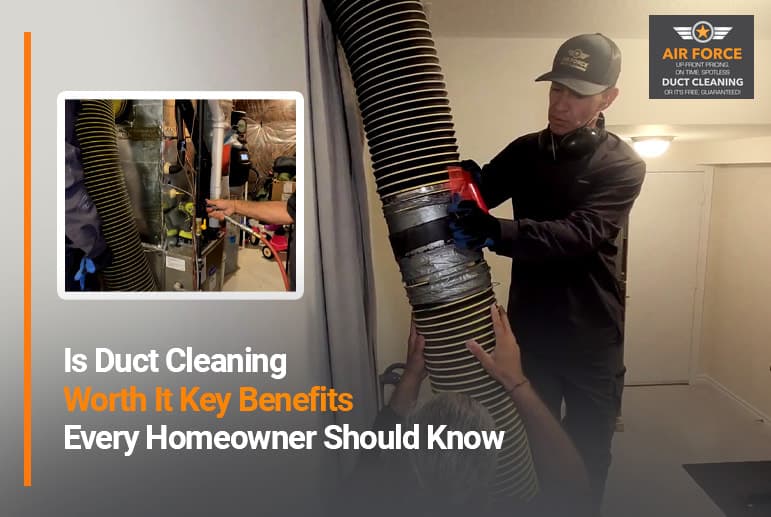
Duct cleaning is worth it when there is something in the ducts that needs to come out: renovation dust, pest droppings, visible mould, construction debris in a new build, or years of build-up in a home that has never been cleaned. It is not worth it as a routine, every-year service, and it will not fix a dirty filter, a leaky duct run, or a humidity problem. That is also what the US EPA, the US industry association NADCA, and a CMHC fact sheet say when you read them side by side.
What the EPA actually says
The US Environmental Protection Agency's page Should You Have the Air Ducts in Your Home Cleaned? is the document most often quoted on this subject, and often quoted badly. Its position is narrow and clear. The EPA "does not recommend that air ducts be cleaned except on an as-needed basis." It says to consider cleaning when:
- "There is substantial visible mold growth inside hard surface (e.g., sheet metal) ducts"
- "Ducts are infested with vermin, e.g. (rodents or insects)"
- "Ducts are clogged with excessive amounts of dust and debris"
The EPA is also blunt about health claims: "Duct cleaning has never been shown to actually prevent health problems." It notes that "a light amount of household dust in your air ducts is normal," and that "much of the dirt in air ducts adheres to duct surfaces and does not necessarily enter the living space."
Two more lines from that page matter for Ontario homeowners. First: "Prior to any cleaning, retrofitting, or replacing of your ducts, the cause or causes must be corrected." Second, on contractors: the EPA warns against anyone who sells duct cleaning as "a routine part of your heating and cooling system maintenance," and says a provider should agree "to clean all components of the system" and be "qualified to do so." After the work, "you should not be able to detect any debris with the naked eye."
What NADCA says
The National Air Duct Cleaners Association (NADCA) is the US-based trade association for the HVAC inspection, cleaning and restoration industry, and publishes the ACR Standard, which it describes as "the trusted benchmark for HVAC cleaning, inspection, and restoration." Its consumer site, Breathing Clean, answers "why clean air ducts" with "Because they get dirty!" and offers a plain rule of thumb: "if your air ducts look dirty, they probably are."
NADCA is the industry's own voice, so read it that way, but it is more measured than you might expect. It states that "dirty ducts don't necessarily mean unhealthy air in your home," and it does not publish a fixed interval. It says households with pets, allergy or asthma sufferers, smokers, water damage or renovation projects should clean more often than the baseline.
In Canada, the equivalent certifying body is CNADCA. Air Force Shield is CNADCA certified (company ID CA-00153).
What CMHC found
Canada Mortgage and Housing Corporation published a fact sheet in its About Your House series titled Should You Get Your Heating Ducts Cleaned? (CE29, 2000, now archived by the Government of Canada). It is the most sceptical of the three sources, and it is worth quoting honestly.
CMHC's 1990s research "tested house and duct performance before and after cleaning. Researchers observed little or no discernible differences in the concentrations of house airborne particles or in duct airflows due to duct cleaning." Its summary: "duct cleaning will not usually change the quality of the air you breathe, nor will it significantly affect airflows or heating costs," and "regular duct cleaning is probably unnecessary for most householders."
CMHC still listed situations where cleaning "could make sense": water or mould in the ducts (fix the water first), a newly built house where you doubt the construction crew's clean-up, older houses after major renovations, furnace airflow trouble that may be a blockage, and visible debris in the return registers. It also noted that cleaning furnace and air conditioning components such as the fan blower and coil "has been shown to make some difference in duct air flow." One more CMHC caution: do not accept offers to fog the ducts with biocide. Our process includes an application of Benefect, a botanical disinfectant; if you would rather skip that step, say so when you book.
When duct cleaning clearly helps
Put the three sources together and the list of good reasons is short and specific. These are the jobs we are glad to take:
- After a renovation. Drywall sanding, flooring work and demolition put fine dust into the return side faster than any filter can catch it. CMHC and the EPA both name renovation dust. The EPA's advice is to seal registers during the work; if that did not happen, cleaning is the fix.
- Pests. Mouse droppings, nesting material or insects in the ducts meet the EPA's "infested with vermin" condition. Deal with the entry point first, then clean.
- Visible mould. Substantial mould on sheet-metal duct surfaces is the EPA's first condition. Find and stop the moisture source before anyone cleans; otherwise it returns.
- A new build. Construction crews leave sawdust, fibreglass offcuts and screws in trunk lines. CMHC specifically lists a newly constructed house.
- Five or more years since the last cleaning, or never. Our recommended interval is every 3 to 5 years. A home that has never been cleaned, or that you have just bought from someone who smoked or kept several pets, usually meets the EPA's "excessive dust and debris" condition once you pull a return grille and look.
- Allergy or asthma households. NADCA's guidance is to clean more often. The evidence that this changes symptoms is weak, as the EPA says, and we will not promise relief. What we can promise is that the dust reservoir in the returns and blower compartment will be gone.
- After a long vacancy. A house that sat empty with the system off, or a rental between tenants, is a reasonable time to inspect and, if dirty, clean.
When cleaning will not fix the problem
These are the calls where cleaning gets sold but something else is wrong:
- A dirty or missing filter. The EPA's first prevention step is to "change filters regularly" and make sure air cannot bypass the filter. If the filter has been in for a year, replace it and wait two weeks before judging the ducts.
- Leaky ducts. Weak airflow to a far room, or a basement that smells like it is being pulled through the house, is usually a disconnected or unsealed duct run, not dirt. Cleaning does not seal anything. The EPA also says to be cautious about sealants.
- Humidity. Condensation on windows, musty smells and mould on cold surfaces are moisture problems. The EPA says "controlling moisture is the most effective way to prevent biological growth in all types of air ducts." Health Canada's moisture and mould guide recommends "maintaining relative humidity levels between 30% and 50%, using a dehumidifier as necessary."
- Ordinary household dust. CMHC's point is the one most people miss: ducts "cannot create dust." Most dust comes from skin, fabric, pets and what is tracked in. Clean ducts will not make a dusty house dust-free.
Our honest position
We would rather lose a $399 job than clean ducts that do not need it. If a technician opens your returns during the pre-inspection and finds a light, even coating with nothing loose, we will tell you, show you the photos, and suggest a filter change or a humidity fix instead. That is in our interest too: our guarantee is "Love it or don't pay," and you cannot love a cleaning that made no visible difference.
When cleaning is warranted, you should expect the whole system, not a quick vacuum at the registers. Our 12-step process connects a truck-mounted vacuum to the main trunks, pressure-cleans every supply and return, brushes the trunks, and cleans the furnace J-channel, blower and furnace base, which is the part CMHC says makes a measurable difference to airflow. Before-and-after photos are emailed to you so you can hold us to the EPA's "no debris with the naked eye" test.
What it costs in the GTA
Pricing is by home size, not per vent. A house with one furnace is $399 under 2,000 sq ft, $449 for 2,001 to 3,000, and $499 for 3,001 to 4,000, before HST. Condos are a flat $399 per unit. The full table, including add-ons for dryer vents and HRVs, is on our duct cleaning cost page. If someone offers the whole house for a fraction of that, read our post on duct cleaning scams in the GTA before you book. Details of what the residential service includes are on the residential duct cleaning page.
Frequently Asked Questions
Does the EPA recommend duct cleaning?
Not as routine maintenance. The EPA "does not recommend that air ducts be cleaned except on an as-needed basis," and lists visible mould, vermin, and ducts clogged with excessive dust and debris as the reasons to consider it.
Will duct cleaning lower my heating bill?
Probably not measurably. CMHC's research found cleaning did not "significantly affect airflows or heating costs," though cleaning the furnace blower and coil made some difference to airflow. Treat cleaning as removing debris, not as an energy upgrade.
Will duct cleaning help my allergies?
The EPA says duct cleaning "has never been shown to actually prevent health problems," and we will not claim otherwise. If your returns are full of pet hair and dust, removing it is reasonable, but a good filter and humidity control matter at least as much.
How often should ducts be cleaned in Ontario?
We recommend every 3 to 5 years, sooner with pets, allergies, or after renovations. NADCA does not publish a fixed interval and CMHC says regular cleaning is probably unnecessary for most households, so judge by what you see in the return ducts, not the calendar.
What if you find my ducts are not dirty?
We tell you. The pre-inspection photos are taken before any cleaning starts, and if there is nothing worth removing we will say so and suggest the cheaper fix, usually a filter or a humidity issue.
Ready for cleaner air?
Get an instant quote online, or call us and talk to a certified technician.